
Running a Sex Offender Check in Monroe County
FDLE's Florida Sexual Offenders and Predators Search is the official public source for Monroe County. No separate Monroe County registry replaces it. A person can search the state portal by name, choose Monroe from the county menu, use a city or ZIP code, or begin a neighborhood search from an address.
The searcher should gather enough details to separate people with similar names. A full name, approximate age, photograph, physical description, and address can help narrow a possible match. Even then, FDLE cautions that fingerprints are required for positive identification. The registry describes statutory registration status; it does not declare how dangerous a listed person may be.
Search Monroe County Offenders Without a Name
A location search is often more useful for community awareness than guessing at a name. In detailed search, leave the name fields blank and select Monroe County, or enter a Keys city or ZIP code. At least one name or location criterion is required. Results can be reviewed in list or map form, and selected profiles can be printed to a PDF in groups of up to 25.
The neighborhood option begins with an address and a radius. Because the live distance choices can change, confirm the choices shown by the FDLE portal rather than relying on an old screenshot. Map, satellite, and hybrid views add geographic context, but each marker should still be opened and read as a current registry profile.
Searching the Florida Sexual Offenders and Predators Search
FDLE Offender Registry Services compiles information supplied by registrants, sheriffs, Florida Department of Corrections, and driver-licensing systems. It does not independently confirm every fact. Use the current record, note its status and source, and return to the portal when time has passed.
- Open the official FDLE search and read its conditions and identification warning.
- Enter a full or partial name, or search by Monroe County, city, ZIP, or neighborhood address.
- Compare the result list with photographs, aliases, age, physical details, and location.
- Open the complete profile and read its classification, status, addresses, and qualifying offense details.
| Field Label | Type | Required | Notes |
|---|---|---|---|
| Last name | Text | No | Full or partial text is accepted. |
| First name | Text | No | May be used with the last-name quick search. |
| City or ZIP | Text | No | Either can supply the required location criterion. |
| County | Select | No | Select Monroe for a countywide list. |
| Address and radius | Text and select | No | Used in Neighborhood Search; confirm current radius options live. |
Why a Monroe County Offender Match Is Not Identification
Shared names, former addresses, aliases, and quick changes in residence can mislead a searcher. FDLE explicitly states that fingerprint comparison is needed for positive identification. A photograph and physical description are useful screening clues for personal awareness, but they do not replace that biometric comparison.
A profile also is not the person's full criminal history. It focuses on facts Florida law makes public for registration. To understand the filed charge and outcome of a Monroe County prosecution, use the Clerk's case file. Broader state criminal-history information comes from FDLE's CCH process. Those records answer different questions and can update on different schedules.
What a Registry Profile Shows
The Florida profile combines identity descriptors, public locations, status, and qualifying-offense information. The exact fields depend on the record and what Florida law permits FDLE to publish. Read the date and status along with the address rather than treating a printed flyer as permanent.
| Name & Aliases | Registered full name and known aliases. |
|---|---|
| Photo & Physical Description | Photograph, age or birth date, race, sex, height, weight, hair, eyes, scars, marks, and tattoos where published. |
| Registered Address | Permanent, temporary, or transient location as public law permits. |
| Offense & Jurisdiction | Qualifying offense, conviction details, and jurisdiction. |
| Classification | Florida statutory designation as sexual offender or court-designated sexual predator. |
| Registration Status | Current public status and warning information, plus vehicles, work, or school fields when statutorily public. |
Registry Law Behind Monroe County Offender Profiles
The official text of Florida's sexual-offender registration law explains the duties behind public offender profiles.
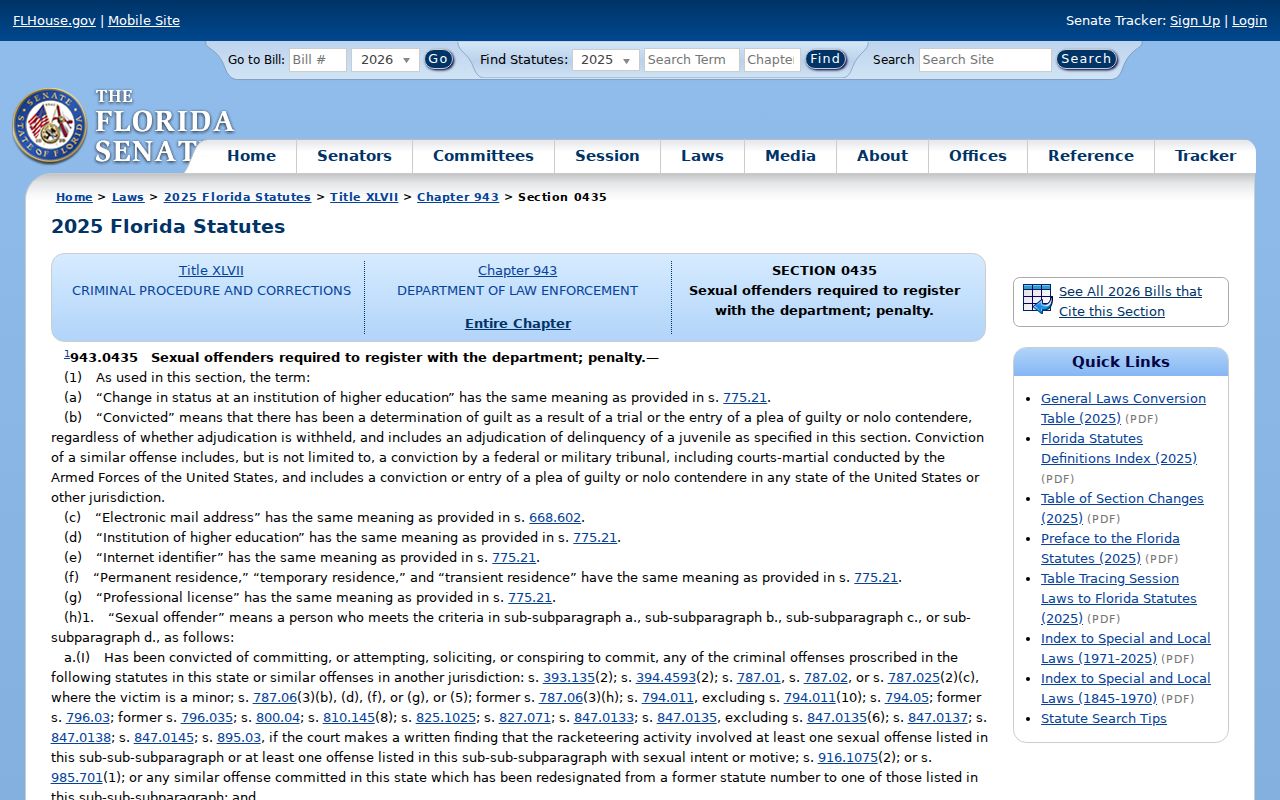
That statute supplies the legal framework, while the live FDLE profile is the practical place to check a current public status.
The Florida Sexual Predators Act sets out the separate court-designated predator classification and public-notice rules.
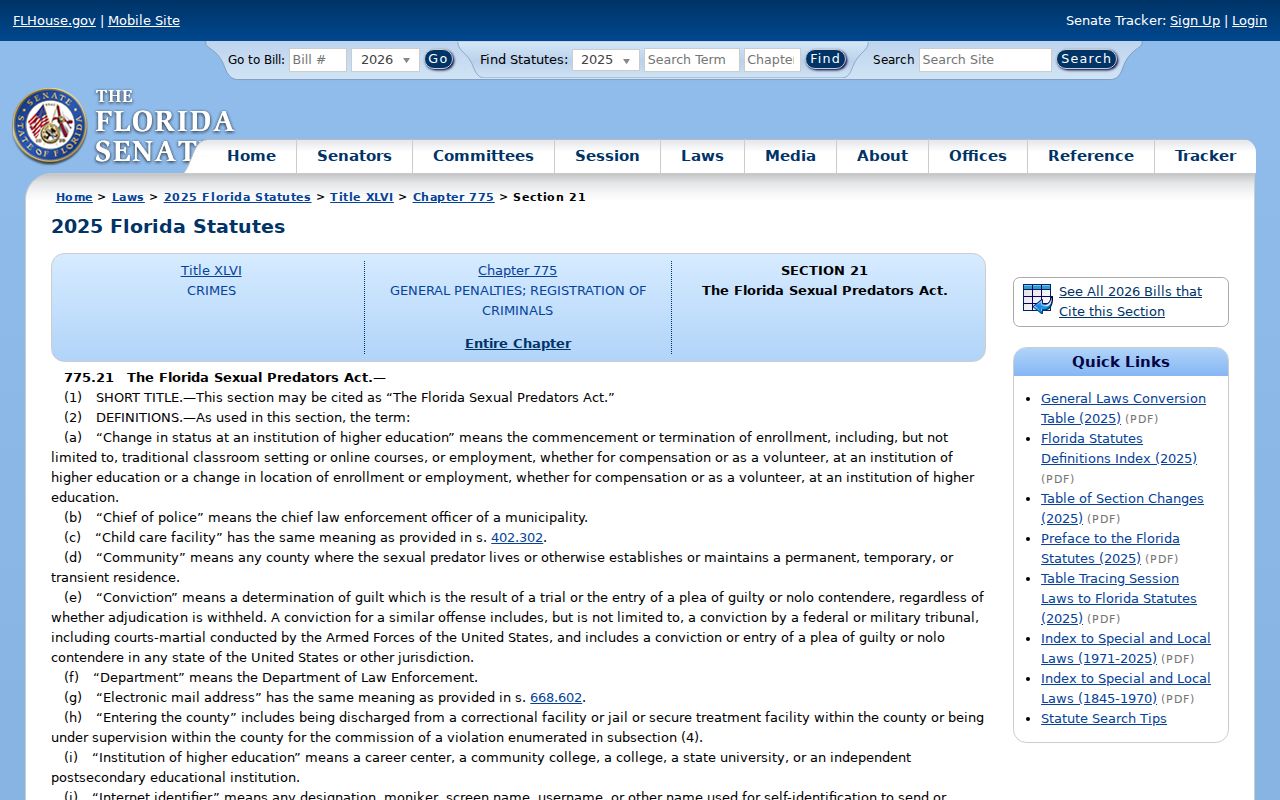
Reading both laws prevents the common mistake of treating Florida's two statutory labels as federal public risk tiers.
Registration Requirements and Levels in Florida
Florida does not publish Tier I, II, or III risk scores on its public registry. Instead, state law uses the classification “sexual offender” and a separate “sexual predator” designation made by a court. Registration is often for life, though narrow removal or petition provisions can depend on the offense, history, and elapsed time.
| Florida classification | Duration | Public meaning |
|---|---|---|
| Sexual offender, §943.0435 | Often lifetime, subject to narrow statute-specific relief | A person who meets a qualifying statutory definition and has a public profile where required. |
| Sexual predator, §775.21 | Generally lifetime | A court-designated classification with enhanced public-notification provisions. |
When Monroe County Offender Searches Need a National Layer
Florida's portal is the right starting point for a Monroe County location, but a search tied to another state may need the U.S. Department of Justice layer. The National Sex Offender Public Website sends one query across participating jurisdictions.
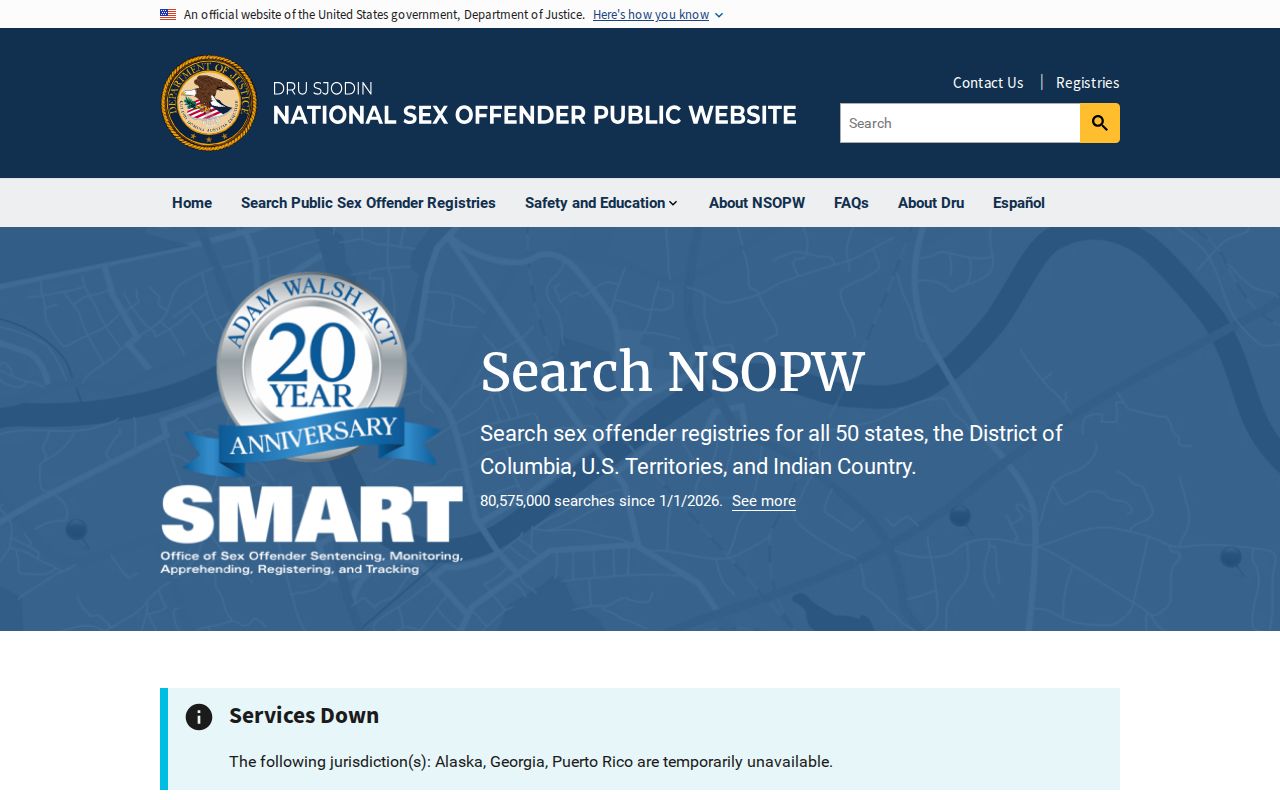
When NSOPW returns a Florida entry, follow it back to the FDLE profile for the state's current details and correction contact. National aggregation is useful for movement across state lines, but the originating registry remains the key source.
Monroe County Offender Alerts and Error Reports
FDLE offers address-alert signup through its registry portal. A Monroe County resident can use that tool to follow changes near an address instead of repeatedly running the same manual search. Alert results should be opened in the live registry so their status, date, and full profile can be reviewed.
If an address appears wrong or a person may not be complying, report the concern rather than attempting direct contact. Call local law enforcement and FDLE Offender Registry Services at 1-888-357-7332, or email sexpred@fdle.state.fl.us. In Key West, use Key West Police; elsewhere in Monroe County, the Sheriff's Office is the local route.
Give the agency the location and the public profile details that prompted the concern. Describe what was observed without claiming that a crime occurred. FDLE or local officers can compare the report with registration records and decide what follow-up is proper. A missing map marker, an old printout, or an unfamiliar vehicle does not establish noncompliance on its own.
The separate FDLE Wanted Persons Search concerns wanted-person records, not registry compliance by itself.
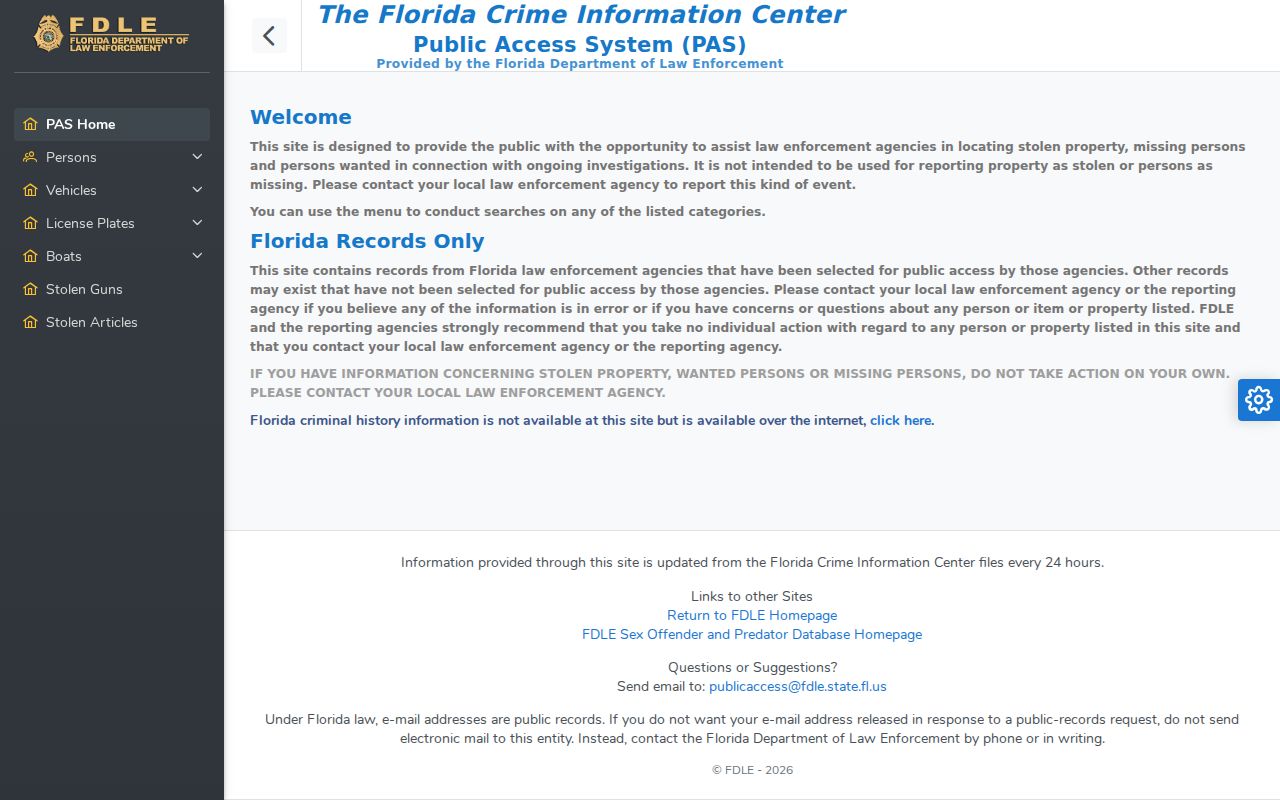
Any wanted-person result must be confirmed with the originating agency. Do not infer an active warrant merely from a registry warning or absence of an address.
Lawful Use of Monroe County Offender Information
Registry access supports personal, family, and neighborhood safety awareness. It does not authorize confrontation or punishment. Florida law controls the official public notice, while FDLE's alert tools and public profiles provide the statewide delivery channel used in Monroe County.
Misuse is a crime: Florida Statutes §775.21(10)(d) bars using registry data to facilitate a crime, secure payment from a registrant, knowingly publish false registry information, or materially alter it to misrepresent the public record. Never harass, threaten, intimidate, or attempt to apprehend anyone.